
I Built a Trustworthy AI Assistant in a Weekend — Here's Why "With Receipts" Is the Whole Game
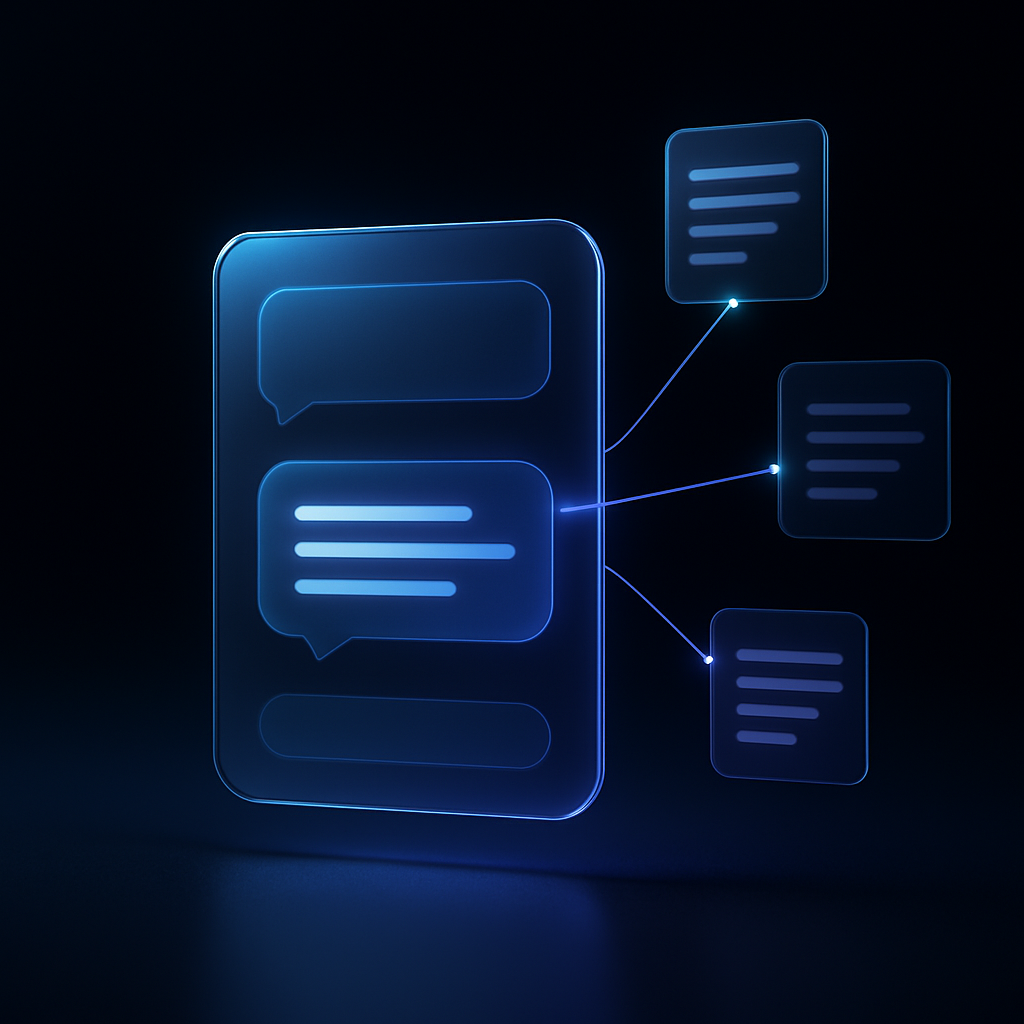
There's a version of "AI on a website" that everyone has met by now: a chat bubble that sounds confident, gives you an answer, and turns out to be wrong. It's fast, it's friendly, and you can't trust a word of it. That gap — between AI that sounds smart and AI you can actually rely on — is the whole game right now.
So instead of writing about it, I built the trustworthy version. It's live, and you can use it right now: enroll.kevinchamplin.com.
What it is, in plain English
Imagine you're a high-schooler — or a parent — trying to figure out a college. You have real questions: What does the online MBA cost? When's the application deadline? Can I finish a computer science degree without ever setting foot on campus? Which scholarships are automatic?
Today you hunt through a dozen PDF pages and a clunky course catalog to find out. The demo I built lets you just ask — in plain language — and get one clear answer back. Two ways to use it: an AI Search box (type a question, get a synthesized answer plus the exact pages it came from) and a Chat Assistant (a back-and-forth conversation that remembers what you already asked).
Here's the part that matters: every answer is built only from the school's real catalog, and it shows you its sources. If it doesn't know, it says so and offers to connect you with a human — it doesn't make something up to fill the silence. Answers, with receipts. Not guesses.
Why "with receipts" is the entire point
A general-purpose AI model has read a huge slice of the internet, but it knows nothing about this specific school's tuition or deadlines. Left alone, it'll cheerfully invent a plausible-sounding number. For a business, that's not a cute quirk — that's a wrong price quoted to a customer.
The fix is a technique the industry calls RAG (retrieval-augmented generation), and the easiest way to picture it is an open-book exam. Instead of asking the AI to answer from memory, you first hand it the relevant pages of the textbook, then say: "Now answer using only what's in front of you, and cite it." That's exactly what this app does on every single question:
1. RETRIEVE — find the catalog pages that actually match the question
2. AUGMENT — hand those pages to the model as the only allowed context
3. GENERATE — answer using only that context, and cite the sources
That three-step loop is what turns "an AI that talks" into "an AI you can put in front of paying customers." It's the difference between a party trick and a tool.
The five things this proves it can do
I built this as a working answer to a very specific kind of brief — the one a lot of companies are writing right now when they say they want "AI-powered digital experiences." Here's what a project like this actually demonstrates, in order:
1. AI-powered web experiences. The whole thing is the experience — not a feature bolted onto a static page, but a site whose core interaction is a conversation. AI-first, not AI-added.
2. Conversational AI and AI search. Two flavors of the same idea: the "just give me the answer" search box (the pattern you now see at the top of Google) and the "let's talk it through" chat. Both grounded, both cited.
3. Modern front-end architecture. It's built in React (via Next.js 14), with the answer streaming in word-by-word the way a person types, instead of making you stare at a spinner. Good front-end engineering is what makes the AI feel fast and calm rather than laggy and uncertain.
4. Google Cloud's AI stack. The brain is Gemini, running on Google's Vertex AI — the enterprise path, not a hobby API key. (More on why that distinction is a big deal in a second.) Retrieval uses Google's text-embedding-004 model, and the whole app runs on Cloud Run, which scales down to zero when nobody's using it, so it costs almost nothing to keep live.
5. Content / CMS integration. The catalog the AI reads from is content — the same kind of content that lives in a CMS like WordPress, Drupal, or a headless platform. My day job is building headless WordPress + React sites, so wiring an AI assistant directly to the content a marketing team already manages is the natural extension of work I do every week.
The detail that separates a demo from production
Anyone can wire up a chatbot in an afternoon with an API key pasted into a file. The reason most of those never make it to a real company's website is everything around the AI: security, governance, and the boring stuff that keeps you out of trouble.
Two examples from building this one:
No keys to leak. A pasted-in API key is a password sitting in your code — lose it and someone runs up your bill. This app uses Google's identity system instead (Application Default Credentials), so there's no secret string anywhere to steal. That's the difference between "Gemini on Vertex AI" and the consumer Gemini API, and it's the first thing an engineer who knows the platform looks for.
The org-policy war story. Halfway through deploying, Google's security policies blocked my own service from talking to the AI — a corporate guardrail called Domain Restricted Sharing, doing exactly what it's designed to do. Fixing it meant understanding the governance model and applying a narrow, project-scoped exception rather than turning the safety off. That kind of navigating-the-rules-without-breaking-them work is the job at the senior level. The flashy part is the demo; the valuable part is knowing why it wouldn't have shipped without that fix.
Where it goes at full scale
This is a prototype, and I built it to be honest about that. If a real institution wanted to run it, here's the upgrade path I'd take it down: swap my hand-rolled search index for Vertex AI Search (Google's managed version), wire it to the live CMS so the moment marketing edits a tuition page the assistant knows, add Dialogflow / Conversational Agents for guided flows like "start my application," and stand up proper testing and monitoring so you can prove it's still accurate next month. One deployment can serve many schools, each reading only its own content.
The bigger point
The companies that win the next few years won't be the ones that bolt a chatbot onto a homepage and call it innovation. They'll be the ones who make AI trustworthy enough to put in front of real customers — grounded in real content, honest about what it doesn't know, and engineered like the production system it is.
That's the kind of work I do. If you want to see it instead of read about it, the demo's right here: enroll.kevinchamplin.com. Ask it something hard.