
Why Race Conditions Are More Common at Checkout Than You Think
The Incident That Shook Our Checkout System
It was a Friday afternoon when I received an urgent message from the operations team: our new checkout process for a Fortune 500 apparel brand had just crashed during peak traffic. The culprit? A race condition lurking beneath the surface.
The Details of the Race Condition
We had just rolled out a headless WooCommerce solution paired with a custom Laravel backend. Everything was looking good during staging. Yet, when we hit production, we noticed a substantial increase in checkout failures — more than 15% error rates during peak load. This was particularly painful since we had anticipated a 20% sales lift from the new implementation, and we were instead looking at losses.
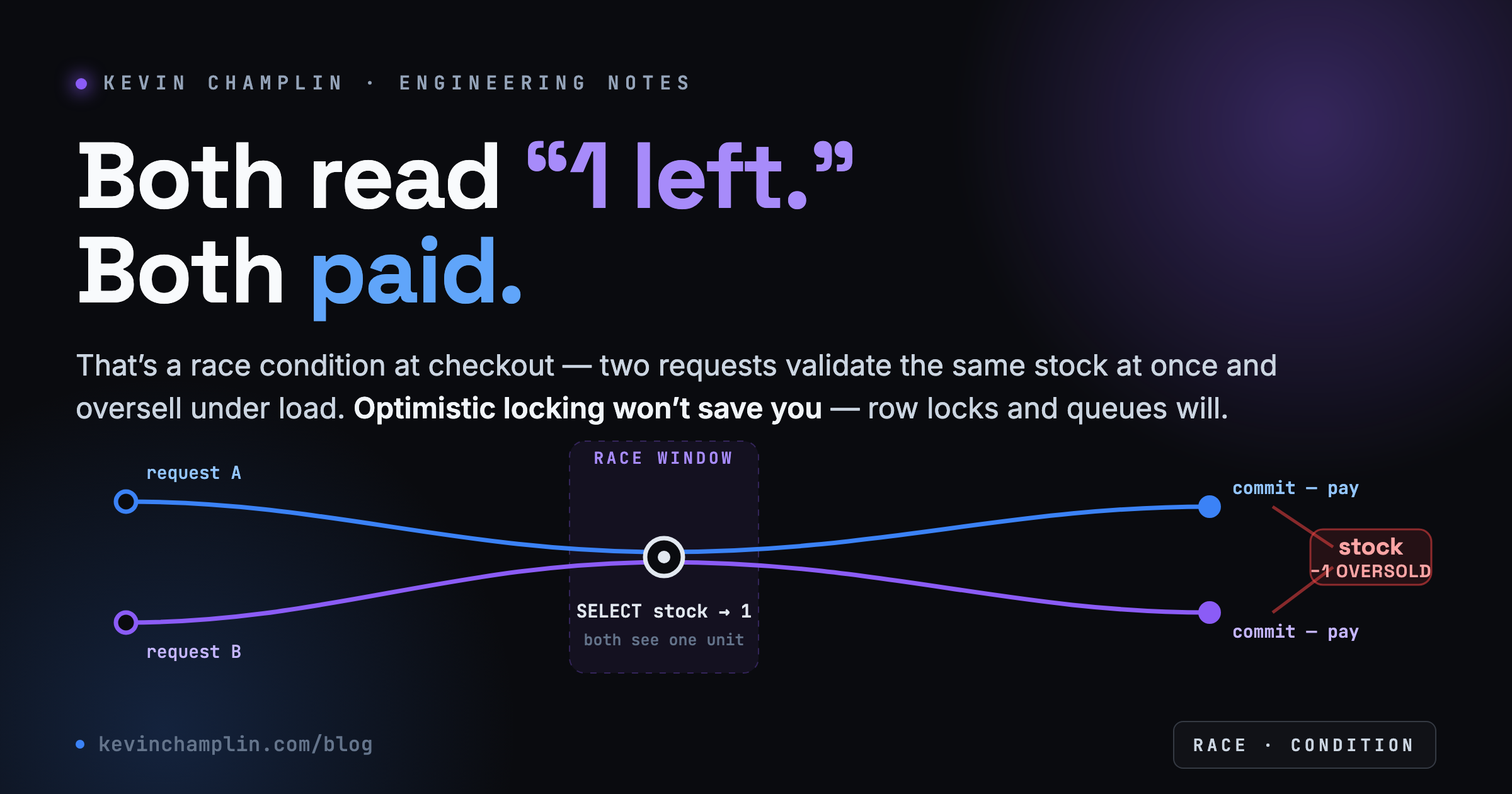
The heart of the issue rested in how we handled stock validation. Using AJAX calls to check inventory while multiple users battled for the same product led to situations where customers could add an item to their cart, proceed to checkout, and hit pay — all before the previous requests validated stock levels. Consequently, this resulted in overselling items and a painful user experience.
Lessons Learned
- Shortcuts May Cost You: We relied on optimistic locking, thinking it would suffice. It won’t — you need proper queue management and immediate validation across shared resources.
- Improving Error Handling: We should have integrated circuits that prevent double processing on the same cart action. Implementing proper mutexes or transaction locks is key.
- Focus on State Management: We revised our state management when customers accessed their carts from multiple devices. Syncing their session state in real-time adjusted the experience and brought our error rates down to under 2%.
The Trade-offs
We opted to refactor our checkout workflow by adding a caching layer that validated inventory before serving requests through Laravel's built-in job queues. The trade-off was a slight increase in load time (up from 1.2 seconds to 1.6 seconds), but the dramatic decrease in errors (from 15% to 1% during peak) justified it. Plus, this ensured the reliability we promised our customers.
Final Thoughts
Based on my 20+ years, I can say this: race conditions in payment processing will test your team's system architecture. Anticipate them, build resilience, and prevent a crash before it happens.
"You can't afford to ignore race conditions at checkout; fix them before they fix you."