
Inside the Game Engine I’m Building — A Lightweight, Roblox-Style Adventure System for Learning
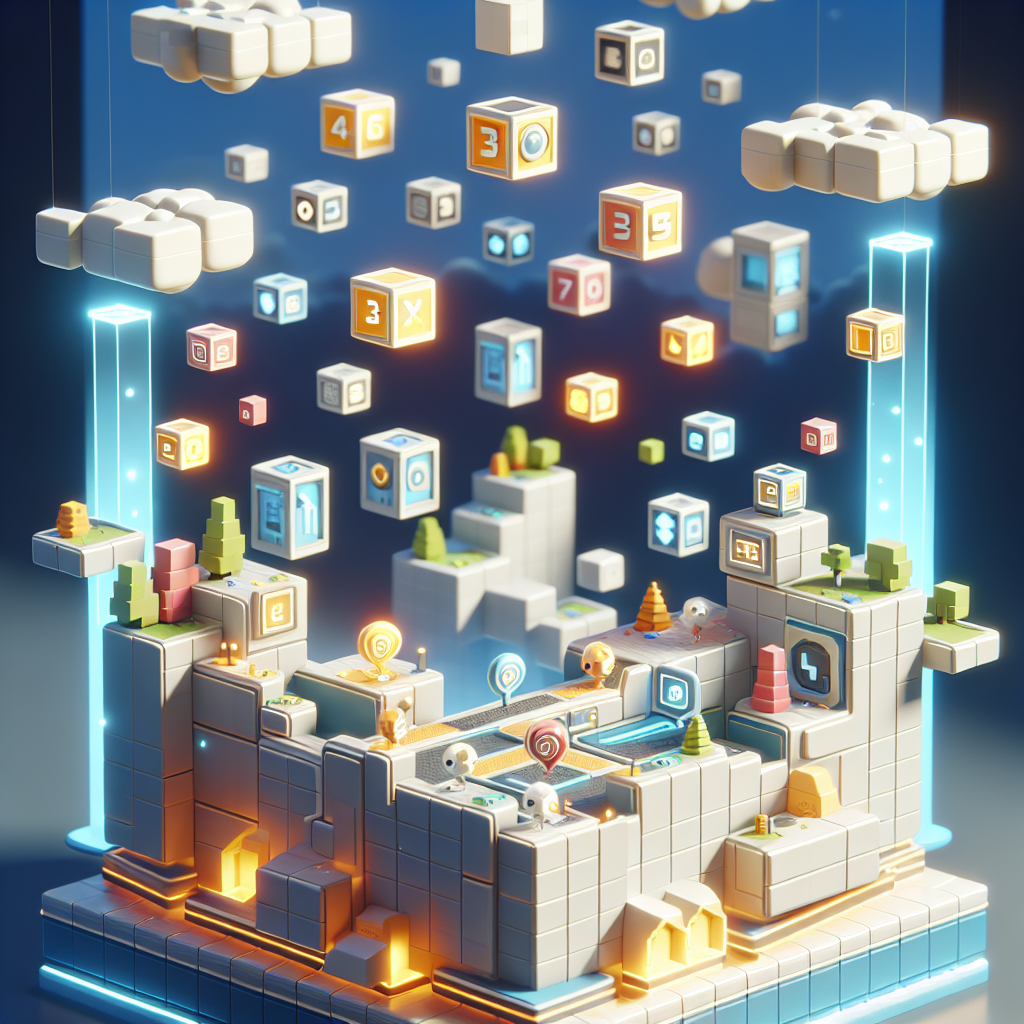
Three days ago, I started building a new internal engine that blends game mechanics with real learning. It’s not a full game platform, not a Roblox clone, and not meant to compete with massive 3D worlds—
but it is designed around the same principles that make Roblox so addictive for kids:
Physics, movement, quests, rewards, exploration, and instant feedback.
This engine is the foundation for a new learning experience.
And honestly… it’s one of the most fun systems I’ve ever built.
Here’s a high-level look at what it does.
A Lightweight 3D Adventure Engine
At its core, the engine is a compact 3D adventure world designed to run right in the browser.
It includes:
-
Player movement
-
Jumping
-
Gravity
-
A smooth camera system
-
Quest regions ("goal gates")
-
Physics-based collision
-
Rewards + celebration overlays
-
Reset/fall detection
-
Input tracking
-
Real-time XP/coin updates
All of this combined creates a small but engaging adventure space where a student can run, jump, explore, and reach objectives. Think of it as a mini Roblox obby-style world built specifically for learning moments.
Smooth, Kid-Friendly Movement Physics
I spent a surprising amount of time tuning the player movement so it feels right.
The engine includes:
✔ Camera-relative motion
When you press forward, you move forward relative to where the camera is pointing.
This gives a true “3D world” feel.
✔ Acceleration & deceleration
The character doesn’t snap from 0 to max speed.
They ease into movement, which feels smoother and more game-like.
✔ Configurable jump strength
Jumps can be:
-
floaty, cartoony, or
-
heavy and realistic
Just by adjusting gravity and impulse.
✔ Damping to remove jitter
Angular and linear damping make the character glide smoothly and stop cleanly, instead of sliding all over the place.
These are the same kinds of movement decisions big game engines obsess over—because movement is the whole feel.
Physics-Based World Design
The engine is built around physics:
-
Rigid bodies for platforms
-
Fixed geometry for terrain
-
Collision detection for hazards
-
Triggers for goals
-
Falling detection (respawns player if they drop below a certain height)
Because it uses real physics:
Kids can run, jump, fall, land on moving platforms (later), and interact with the world like a real game—not just a math quiz in disguise.
Quest Completion + Celebration System
This is one of my favorite parts.
When the player reaches the goal:
✔ A celebration overlay pops up
Stats, coins, message, whatever you want.
✔ Movement is temporarily disabled
So it feels like a real reward moment.
✔ A short timed animation plays
Before the system gracefully hands control back to the main dashboard.
This is small…
but it’s the kind of polish that makes kids feel rewarded.
A Modular Engine for Many “Worlds”
Right now, one world exists.
But the engine is built so new ones can be added in minutes.
Each world can define:
-
Its own terrain
-
Obstacles
-
Theme
-
Difficulty
-
Rewards
-
Background art
-
Jump strength, gravity, movement speed
-
Goals and hazards
It’s basically a template engine for adventure worlds.
Add a new Level → drop in some physics objects → attach goal triggers → done.
This means future learning missions can feel fresh and varied.
A Roblox-Like Experience, But Purpose-Built
It’s not trying to be Roblox.
But the inspiration is there:
-
Mini worlds
-
Fun physics
-
Simple controls
-
Clear objectives
-
Reward loops
-
“Just one more try” energy
Except instead of collecting hats or skins…
kids earn XP, streaks, confidence, and progress.
The engine lets learning feel like exploration instead of obligation.
Why This Matters
Because kids don’t connect with PDFs, worksheets, or static apps.
But they instantly connect with movement, momentum, motion, and mastery.
Games use:
-
Physics
-
Rewards
-
Progression
-
Adventure
-
Trial and error
To hold attention in a way school rarely can.
By combining real learning with a lightweight game engine, we get the best of both worlds:
Education delivered in a format kids already love.