
The Vibe Coder vs. The Engineer: Why Your Neighbor's Nephew Isn't a Programmer
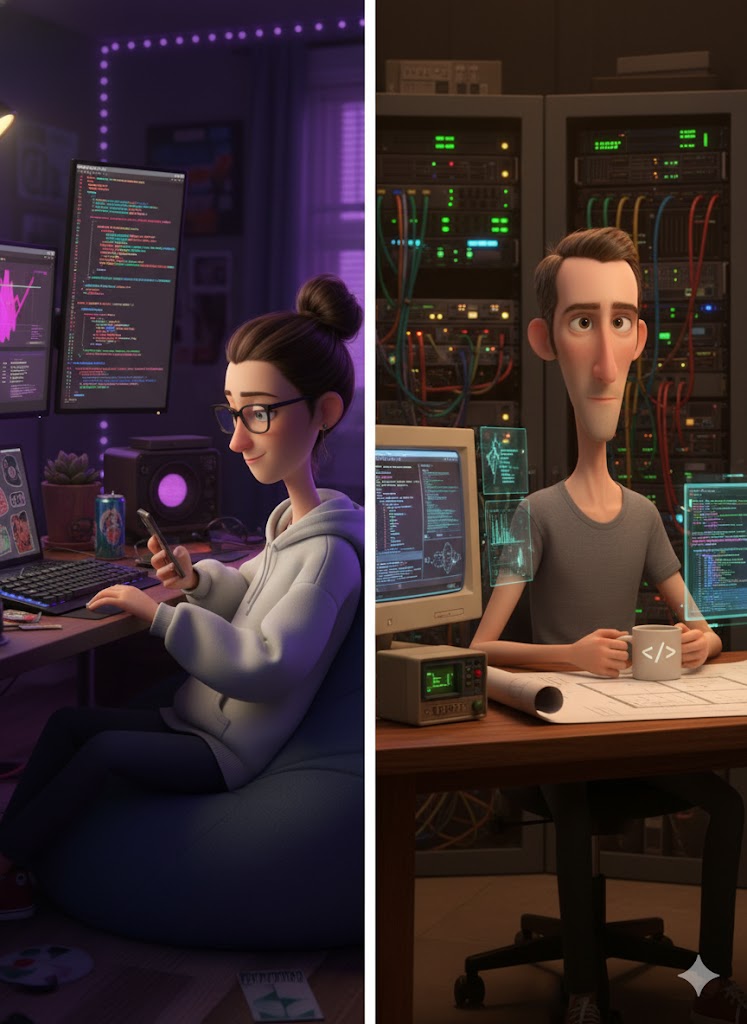
He talks about his MERN stack and his side hustle building a crypto-tracker app. He can rattle off JavaScript frameworks faster than I can tune a SQL query. He codes with vibe.
I’ve spent 20+ years shipping enterprise releases, teaching programming courses, and leading teams through Fortune 100 fire drills. And while I applaud anyone learning to code, I have to be direct: Vibe Coding is not Programming.
Here's the difference—and why one lands you a GitHub trophy, and the other lands you a seat at the architecture review.
1. The Output: Feature vs. Platform
The Vibe Coder's Goal: Ship a feature. Build an app that looks cool and passes the demo.
The Programmer’s Goal: Ship a resilient platform.
A Vibe Coder starts with a framework and builds up. A Programmer starts with a System Design Document. We aren't just concerned with whether the button works, but:
Latency Budget: Will this service reply in sub-200ms at the 99th percentile?
Security Perimeter: Does this deployment introduce a PCI compliance risk?
Error Handling: What happens when the database connection pool is exhausted?
If the code isn't designed for observability, telemetry, and predictable failure, it's just a functional prototype dressed up for production.
2. The Toolkit: Library vs. Systems Thinking
The Vibe Coder’s Toolkit: A trendy library and Stack Overflow.
The Programmer’s Toolkit: Systems Thinking, Incident Playbooks, and an understanding of the why behind the vendor CLI.
I’ve seen Vibe Coders pull in a 5MB dependency to flip a switch when a five-line C# or PHP function would suffice. They are expert assemblers of existing parts.
A professional programmer, the kind who tunes C# services for Wells Fargo or refactors COBOL for a university, knows the iron and the stack from the kernel up. They understand:
Database: Not just ORMs, but SQL Plan Diagrams, compression ratios, and SAN zoning.
Networking: The difference between a firewall rule and a service mesh policy.
The Code Itself: They aren't afraid of a hex dump for a forensic audit.
Vibe Coders use tools; Programmers design systems that use tools.
3. The Test: "It Works on My Machine" vs. The Pager Test
The Vibe Coder's Test: Does it run on my laptop?
The Programmer’s Test: Can I go to sleep knowing this system is running?
My career has been defined by late-night pager duty and building systems that eliminate it. Observability isn't a feature we add at the end; it's the foundation we pour first.
When a Vibe Coder hits a bug, they spend hours debugging a dependency. When a Programmer hits a bug, they open their Grafana dashboard and see the latency spike, the memory leak, and the canary failing—because they built the telemetry into the core.
Programmers build systems that self-heal and tell you exactly why they failed. Vibe Coders build code and wait for the support tickets.
💡 The Takeaway: From Syntax to Strategy
The biggest difference isn't in syntax—it's in the mindset.
I’ve taught hundreds of students to code, from introductory for loops to advanced database design. I always tell them: Coding is a skill; Engineering is a discipline.
If you want an app built, hire the Vibe Coder.
If you want a platform that scales, survives fire drills, passes audits, and blends AI/automation into measurable business outcomes, you need the person who speaks fluent RFC, vendor CLI, and plain English.
Want to chat about turning your next "cool app" idea into a resilient, production-ready enterprise solution? Bring me into your Slack.